BLS Course Review for Real Emergency Readiness
A monitor alarm, an unresponsive patient, a child pulled from the water - emergencies do not pause while someone remembers what was covered in class. A meaningful BLS course review should answer one central question: will this training prepare a person to recognize cardiac arrest, begin effective care, and work with others until advanced help arrives?
For healthcare professionals, a BLS credential may be required for employment. For organizations, it may be part of a compliance file. Those needs are real, but the card is not the outcome. Competence under pressure is. The best courses make the required standards practical through repetition, correction, realistic scenarios, and direct instruction from people who understand the pace of an emergency scene.
What a BLS Course Review Should Measure
Not every course delivers the same learning experience, even when the certification requirement appears similar. A useful review looks beyond convenience, price, or how quickly a class can be completed. It examines whether participants leave able to perform the skills correctly when stress, noise, limited space, or a frightened bystander complicate the response.
Start with the instructor. Strong BLS instruction is precise without being needlessly intimidating. Participants should understand why high-quality compressions matter, how to recognize ineffective CPR, when to use an AED, and how team roles change the response. Instructors with EMS experience can connect the course material to field realities: communication breaks down, fatigue affects compression quality, and clear leadership prevents dangerous delays.
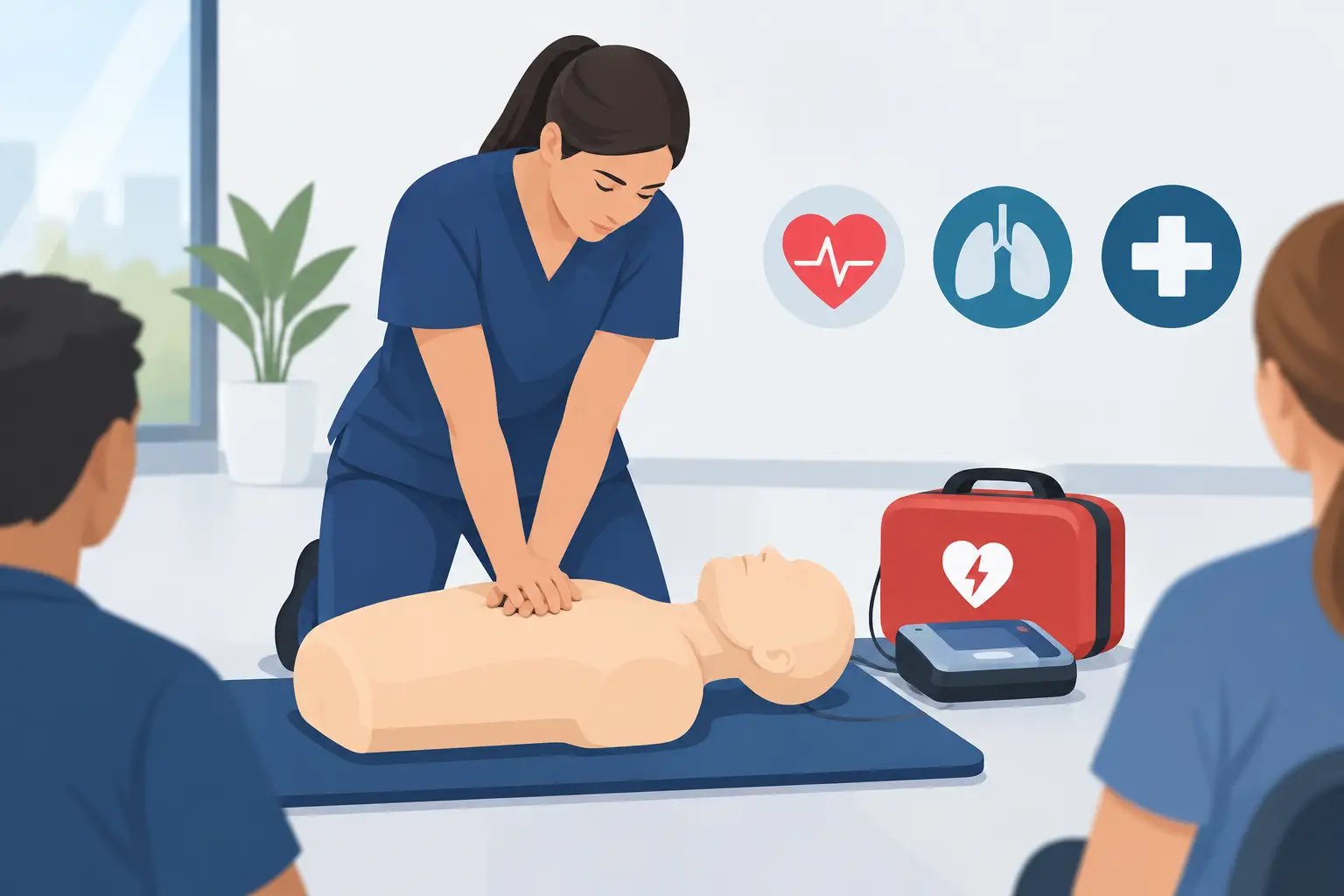
Next, look at the amount of hands-on time. Watching a demonstration has value, but it does not create reliable muscle memory. Learners need repeated opportunities to position their hands, establish proper compression depth and rate, allow full chest recoil, deliver ventilations, attach AED pads, and respond to feedback. A course that moves too quickly through practice may satisfy a schedule, but it can leave participants uncertain when their skills are needed most.
Assessment also matters. A credible course does not assume that attendance equals proficiency. Participants should be evaluated on the steps that protect a patient: scene safety, responsiveness, breathing assessment, activation of emergency response, CPR quality, AED use, and teamwork. Errors should be corrected clearly and respectfully before the learner completes the course.
The Skills That Separate a Card From Readiness
Basic Life Support training covers more than compressions. It gives responders a structured way to act when a patient has no normal breathing or no pulse, while coordinating emergency resources and protecting their own safety. The sequence must be understood well enough to use without hesitation.
Adult CPR is often familiar to experienced healthcare staff, yet quality can decline when people are tired or assume prior experience is enough. A thorough course reinforces the details that affect blood flow during cardiac arrest: correct hand placement, adequate depth, an appropriate rate, complete recoil, and minimal interruptions. These are not minor technical points. They directly affect the quality of care delivered before advanced intervention is available.
Child and infant response requires equal attention. Smaller patients are not simply adults with smaller bodies. Compression technique, hand placement, ventilation considerations, and team approaches must be practiced deliberately. Community members, daycare personnel, school staff, church safety teams, and family caregivers especially benefit from time spent working through pediatric scenarios rather than treating them as a brief add-on.
AED training should be practical, not ceremonial. Participants need to be comfortable turning on the device, exposing the chest, placing pads correctly, following prompts, keeping everyone clear during analysis, and returning immediately to compressions. An AED is designed to guide users, but confident action still depends on familiarity. The first time someone hears its prompts should not be during a real cardiac arrest.
Why Scenario Training Belongs in Every Course
A quiet skills station is necessary, but it is only the beginning. Real emergencies involve competing tasks. Someone calls 911. Another responder retrieves the AED. A team member takes over compressions. A family member asks what is happening. The patient may be in a bed, hallway, workplace, gym, sanctuary, or parking lot rather than on an open classroom floor.
Scenario-based training turns individual skills into coordinated response. Participants learn to assign roles, use closed-loop communication, announce when compressions are starting or stopping, and anticipate the next step. These habits are especially important in clinical settings, where delayed or unclear communication can undermine otherwise capable care.
The scenario does not need theatrical detail to be useful. A well-run exercise may simply introduce a location constraint, an additional responder, a pediatric patient, or an AED that arrives after CPR has begun. What matters is the debrief. Learners should hear what worked, where time was lost, and what action would make the next response more effective.
For organizations, scenarios can be tailored to actual risks and workflows. A nursing home team may need to consider how staff call for assistance across units. A school may need a response plan that accounts for children, visitors, and a large campus. A workplace may need to identify who retrieves the AED and who directs EMS to the patient. This is where group training becomes operational preparation rather than a room full of employees completing the same requirement.
Convenience Has Value, but It Is Not the Only Standard
Scheduling matters. Healthcare workers have demanding shifts, and operational leaders cannot always release entire teams for off-site instruction. Clear course options, fixed individual pricing, and on-site group delivery can remove barriers that cause training to be postponed. BLS Updates offers initial BLS certification, renewal courses, community CPR instruction, and custom training for teams that need an approach built around their operations.
Still, convenience should not come at the cost of practice. A short class may be appropriate for a focused renewal group with recent, well-maintained skills. It may be less appropriate for new healthcare entrants, staff who have not performed CPR recently, or teams adopting new emergency procedures. The right format depends on the learners' experience, the setting, and the responsibility they carry.
Online coursework can help participants review concepts and prepare for a skills session. It cannot fully replace instructor observation and physical practice where hands-on competence is required. Before choosing any course, learners and employers should verify the credential requirements of their licensing board, employer, clinical program, or accrediting body. A convenient format that does not meet the required standard creates a problem later.
Questions to Ask Before You Enroll or Schedule a Team
A course provider should be able to answer practical questions directly. Ask whether learners will practice adult, child, and infant CPR; whether AED use is included; how skills are evaluated; and how much instructor feedback is provided. For professional audiences, also ask how the course addresses team dynamics and whether the instructor can adapt scenarios to the workplace.
Organizations should confirm the expected class size, available training space, scheduling options, equipment needs, certification documentation process, and whether the provider can train multiple departments without unnecessary disruption. These details determine whether a training plan works in practice, not just on paper.
Price deserves consideration, but it should be viewed alongside the instruction participants receive. A lower-cost course that provides limited practice can become expensive if employees must retrain, lack confidence, or fail to meet a credential requirement. The goal is not to make training longer than necessary. The goal is to make every required minute count.
The Standard Worth Holding
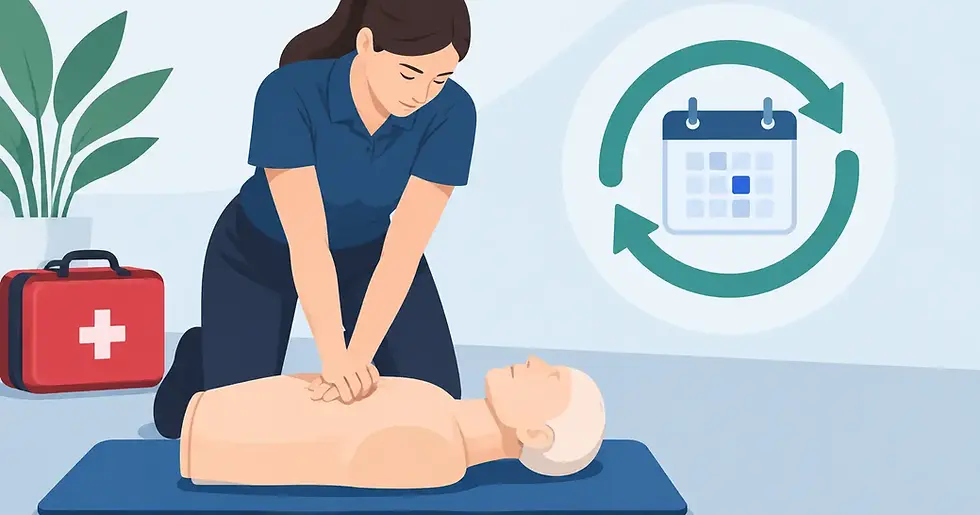
The strongest BLS course leaves people with a clear sequence of action and the ability to carry it out. Participants should know how to identify an emergency, call for help, start effective CPR, use an AED, and support a coordinated response. They should also understand that skills fade when they are not used, which makes focused practice and timely renewal part of professional responsibility.
Preparedness is not measured by how quickly a card is issued. It is measured by what happens when a coworker, patient, child, or stranger suddenly needs help. Choose training that treats that moment with the seriousness it deserves, then keep the skills active enough to use without waiting for someone else to take the first step.
Comments